
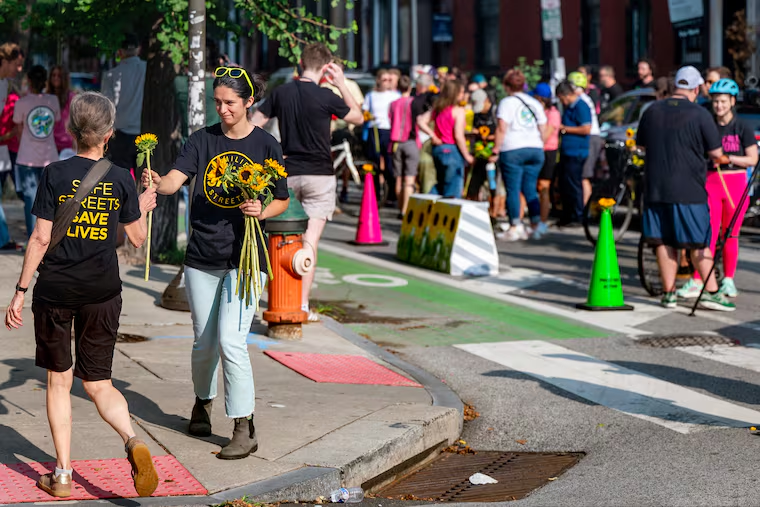
Dozens of sunflowers bloomed near 18th and Spruce Streets on Sunday morning in memory of Barbara Friedes, as family, friends, and others gathered to remember the CHOP pediatric chief resident. They were marking the second anniversary of when she was struck on her bike and killed by a drunk driver in July 2024.
Read more D.C. probation officers learned from a Philly youth organization about connecting with kids
The death has reverberated since then.
Friedes’ death sparked public outrage and protests over traffic safety, with hundreds of cyclists calling for concrete-protected bike lanes, among other traffic safety improvements.
For Catherine Dietrick, Friedes’ younger sister, there are no words or legislation that can bring her sister back.
“The last time a crowd gathered right here was two days after my sister was killed. There was no angel bike yet,” she said, referring to a memorial bicycle placed at the site.
“There were just people, a lot of flowers, notes, and a freshly power-washed street. Across the street, the steps of that house were still crumbled from the impact, and although these steps are fixed now, my sister never can be.”
She sees the fight for safer roads for cyclists as something her sister would want to do to protect others.
“I don’t know if a barrier between the bike lane would have saved my sister that day, but I know the lack of one didn’t, and to me, that’s terrifying,” Dietrick said.
After the crash, in the fall of 2024, city transportation officials recommended $4.8 million in safety upgrades to bike lanes along Pine and Spruce Streets, including concrete barriers.
A law signed by Mayor Cherelle L. Parker to prevent vehicles from stopping in city-designated bicycle lanes followed in December 2024.
Separately, the city tried to establish new loading zones on Pine and Spruce Streets to ease pressure on the bike lanes, but neighboring residents sued, and on July 6, a judge upheld a temporary injunction blocking the action until the case is settled or goes to trial.
Members of Philly Bike Action, an advocacy group, said the injunction delayed safety improvements, despite City Hall’s support.
Read more Photos from Phillies Mets game on Sunday
“Despite all that progress, our energy, all that public support, Spruce and Pine are still as dangerous today as they were the night that Barbara was killed,” said Jacob Russell, an organizer for Philly Bike Action.
Although Philly Bike Action leaders said they understood the need to wait for the legal proceedings, they believed the city could move forward with a concrete barrier to keep cyclists safe.
“We can’t wait another two to five years,” said organizer Jessie Amadio. “The barrier is not much bigger than the curves on the end of the road and will prevent cars from merging into the bike lane and hurting people.”
Attending the memorial, City Council President Kenyatta Johnson said preventing traffic violence has the same importance as preventing gun violence.
“When a person is shot and murdered in the city of Philadelphia, we step up; we show up; we rally and come up with policies, and we also back it up with our budget,” Johnson said. “We have to also continue to make sure we are doing the same thing when it comes to traffic violence here.”
As the crowd applauded, Johnson pledged he would remain committed to finding ways to protect cyclists in Philadelphia.
Philly Bike Action members set up a barrier during the memorial with pink and green cones, and a Jersey barrier painted with 12 sunflowers, Friedes’ favorite flower, one for each cyclist who has died in a traffic accident since her death, the group said.
“To the community members who oppose safer bike lanes, I understand that these changes may feel inconvenient. However, I ask you to consider the lives that you could be saving,” said Mary Dietrick, Friedes’ mother.
“The decision before us is about more than paint, parking, or traffic patterns; it’s about the kind of city Philadelphia chooses to be.”
Read more After 39 days, Philly’s FIFA Fan Festival comes to an end