
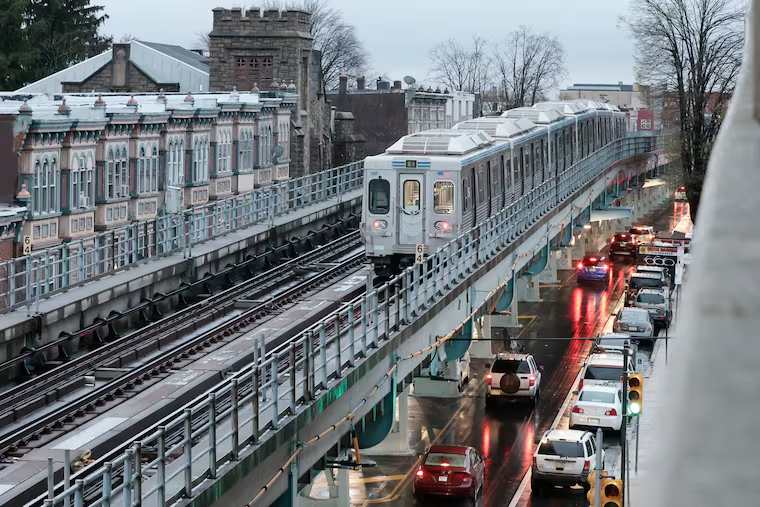
SEPTA is embarking on an experiment to extend its all-access transit pass, SEPTA Key Advantage, to apartment building residents.
Read more As measles cases in Pennsylvania rise, officials scramble to track cases
Currently employers and schools can buy into the benefit program. The institutions pay for the passes, and then workers and students sign up toreceive a SEPTA Key card that is free for them to use.
Since its creation in 2022, beneficiaries have used SEPTA Key Advantage for 25 million rides.
Now SEPTA has received a $150,000grant from the Delaware Valley Regional Planning Commission (DVRPC) for a pilot program extending the benefit to apartment building owners.
The two-year program will be open to a handful of apartment buildings so SEPTA can study how tenants use it. The first company to sign on is the HOW Group, a large multifamily developer and owner in Philadelphia.
“A lot of our properties are located near SEPTA stations, and with a lot of our buildings, their biggest amenity is their location,” said Kelli Tomczak, vice president of property management at the HOW Group. “It was a great opportunity to emphasize how big of an amenity that is coupled with the SEPTA pass.”
The SEPTA Key Advantage will be offered first to tenants in the HOW Group’s 104-unit apartment building at 1900 N. Front St. known as the Isaac. It has no parking but is directly across the street from SEPTA’s Berks Stationon the Market-Frankford Line.
“A lot of people who are living there are already utilizing the El. That’s what makes this a great amenity,” Tomczak said.
SEPTA says it is in talks about bringing the benefit to another HOW building in University City, which has frequent bus lines to Center City, trolleys, and the Market-Frankford line.
The transit agency also wants to try the pilot in a couple suburban buildings and are searching forpartners with 50- to 100-unit buildings near stations in Philadelphia’s collar counties.
“We are really trying to hone in and really understand, when you have this free pass, do you start to take transit more?” said Gabrielle Pristera, senior sales development specialist with SEPTA.
Read more LeBron James’ new teammates — and other Philly athletes — react to his signing with Sixers
“We want to really build the case to show other multifamily properties that there is value in adding Key Advantage as an amenity through this pilot,” Pristera said.
SEPTA Key Advantage originated when transit ridership was struggling back from COVID.
The program wascreated to get more people riding SEPTA regularly, while raising revenue for the service. SEPTA estimates that it saves regular riders $110 a month.
Today SEPTA Key Advantage has 60,000 members, 63 participating employers (including the City of Philadelphia), and four participating colleges and universities.
Roughly half the eligible students and workers have taken advantage of the benefit and SEPTA has found that at small companies 80% of employees sign up.
The transit authority has long wanted to expand the program to apartment owners and tenants.
“Especially within Center City, with development being so costly, this is just one of the easiest amenities to get started,” Pristera said. “You don’t have to have space for it. You just can just distribute key cards and go.”
Philadelphia has seen an apartment building boom in recent years.Neighborhoods like Northern Liberties, Fishtown, and University City have seen thousands of new units added near subway, elevated, and trolley lines.
DVRPC’s grant money will pay for the administrative costs of the pilot, as property managers don’t have the same kind of human resources departments as employers and higher education institutions.
The grant from DVRPC will last until 2028. SEPTA will evaluate the results of the program and decide how to proceed from there.