
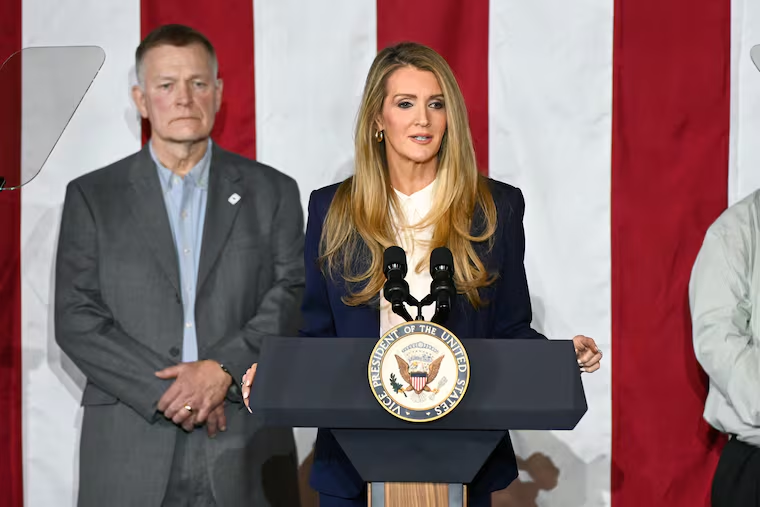
Despite a significant reduction in its staffing, the Small Business Administration (SBA) has been sharply focused this year on reorganizing internally, going after COVID fraud, and — of high importance to many small businesses — providing more financial resources, particularly grants, guarantees, and loans.
For example, the agency is offering new supply chain grants. Launched last week, these grants — a total of 20 for up to $500,000 each — are targeted at helping small businesses address supply chain constraints and increase production.
Companies and nonprofits can apply if they are eligible in a variety of industries that deliver technical assistance, industry engagement, supplier development, or similar services so that small businesses can reshore more of their purchasing or manufacturing.
The deadline for proposal submissions is Aug. 7.
Increased loan availability to $10 million
The SBA offers various loan and loan guarantee options, with its two most popular being the Section 7(a) and Section 504 programs. These programs can help fund equipment, property, and other capital costs — including the purchase of a business — through guaranteed loans made available by their network of qualified financial institutions.
Each program allows a maximum of $5 million in financing, but this month the agency announced it will allow qualified borrowers to combine the programs to create a maximum $10 million in potential financing.
Sherwood Robbins, who runs Seedcopa, a firm specializing in SBA financing that has offices in Exton and Wilmington, says he’s very optimistic about the program.
“Just about any business or industry can benefit from this new way to combine the SBA 504 and SBA 7(a) loan programs,” he said. “When used correctly and for the right projects, small businesses now get access to larger loan limits across the two SBA loan programs for their growth and expansion.”
Grocery and manufacturing guarantee loans
In March, the SBA said that it was making a special effort to provide financing for small businesses that produce, process, distribute, and sell food by increasing the loan guarantee they offer to their member banks issuing loans for up to 90% from the current 75% level.
That same month, the agency said that it would provide the same additional guarantees for small manufacturers to help them expand facilities, hire workers, and increase production.
In addition, the SBA recently expanded its International Trade Loan eligibility to include small businesses across the food supply chain, including those in the agriculture, production, and logistics industries.
Read more Democrat’s TV ad targets data centers in drive to oust Republican from swing Pennsylvania House seat
“Being able to do 90% financing versus 80% or 75% financing lets businesses hold on to that critical cash so that they can invest in other parts of their business,” said Tom Pretty, head of SBA Lending at TD Bank, which has dozens of locations in the area. “Because of the SBA guarantee, a lender may be able to lend more aggressively against accounts receivable, inventory or other assets and provide a larger line to help a customer grow more quickly.”
Manufacturing grants
In May, the agency announced the availability of up to $50 million in grants to as many as 10 eligible applicant organizations. The grants could go toward training, technical assistance, and support “they need to grow, reshore critical supply chains, and help secure America’s position as a global manufacturing powerhouse for generations to come,” said SBA administrator Kelly Loeffler.
Under this program, eligible U.S. small businesses in industries such as aerospace, industrial machinery and equipment, construction equipment, metal fabrication, and robotics would get access to free business courses, hands-on training, and one-on-one consulting. The deadline for this year’s program was June, but the program will likely be back, so watch for opportunities to apply.
New working capital loans
The agency announced last year that it would provide new working capital loans to eligible companies under its existing 7(a) program that could be used for financing receivables and other working capital needs beyond the program’s traditional objective of financing equipment and property.
The working capital loans come at a higher interest rate than a traditional 7(a) loan but are still much lower than what most credit cards and private lenders charge. In February the agency announced that $150 million in credit was extended under the new program.
Pretty advises his customers to use these loans when borrowing needs fluctuate or they are taking on large contracts where funding can help with payroll, inventory, and other costs.
“Unlike a standard 7(a) term loan, the working-capital program revolves, so the business draws funds as needed and pays interest only on the amount being used,” he said. “It’s like having a credit-card limit without remaining fully borrowed all the time.”
Your business may be eligible for these programs, so it’s important to discuss with people who are familiar with what would best for you. This can include an SBA banker, an expert from SCORE, or a local Small Business Development Center office.
“When used correctly for the right projects, small businesses can really benefit by getting access to these programs for their growth and expansion,” Robbins said.
Read more Fallout from N.J.’s voter roll glitch | Inquirer South Jersey